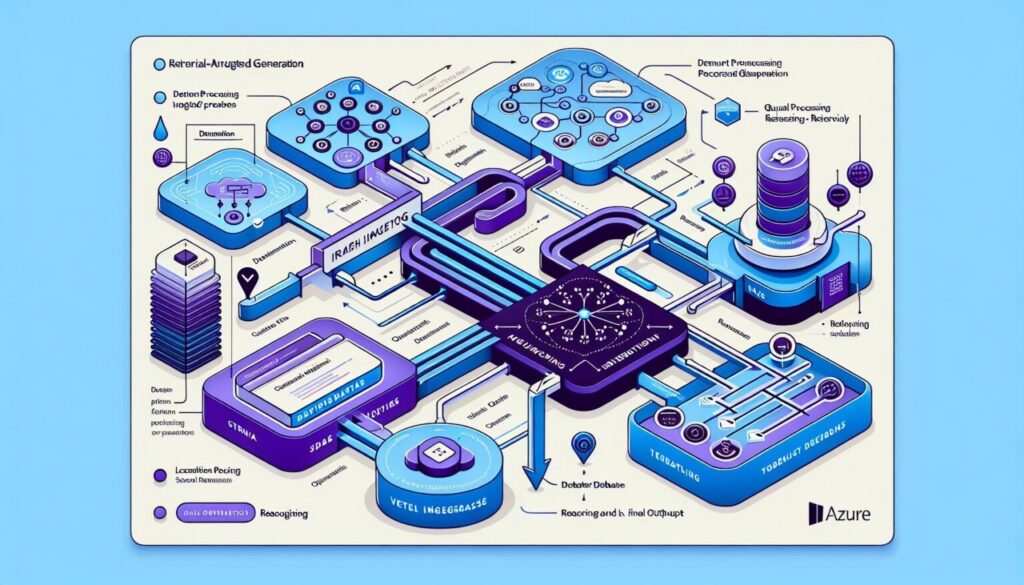
Azure AI Foundry / Anthropic Claude Multi-Agent Pattern
Bringing Anthropic’s Claude into Azure AI Foundry is a massive shift for enterprise AI. Previously, if a bank wanted to use OpenAI’s GPT models, they used Azure; if they wanted Claude’s superior reasoning and coding capabilities, they had to stand up an entirely separate infrastructure on AWS Bedrock or GCP.
By putting Claude natively into Azure AI Foundry, Microsoft has made Azure a unified “Model Marketplace”.
Here is exactly what this means, the core use cases, and how Tier-1 firms are leveraging it right now.
1. What It Actually Means (The “Sovereign” Tech Reality)
It means you get Claude’s brain inside Microsoft’s vault.
- Unified Billing & Subscriptions: The bank doesn’t need a new commercial agreement with Anthropic. Your Claude token usage runs directly through your existing Azure Consumption Commitment (MACC).
- Enterprise Security (Entra ID): You don’t manage loose, risky Anthropic API keys. You connect to Claude using native Microsoft Entra ID (Azure AD) tokens and role-based access control (RBAC).
- Observability Out of the Box: Azure automatically tracks all your Claude API latency, error rates, and costs through Azure Monitor and Log Analytics. You can wire OpenTelemetry straight to Application Insights to map exactly how your multi-agent team is interacting.
2. Core Enterprise Use Cases
Firms aren’t using Claude on Foundry as a basic Q&A chatbot; they are using it for High-Context, Long-Horizon Agents.
A. Multi-Agent Autonomous Coding & CI/CD
Because Claude (especially Sonnet and Opus) is the industry leader in agentic coding, firms use it to manage code repositories.
- Example: An orchestrator agent accepts a bug ticket, assigns a Generator Agent to write a Python fix, a Checker Agent to run unit tests in a container, and a Writer Agent to open a Git Pull Request—all running via Foundry.
B. Visual Document & Chart Extraction (Multimodal)
Claude has unmatched vision capabilities for dense, messy layouts.
- Example: Uploading a 200-page PDF containing financial charts, corporate structural diagrams, and dense nested tables. Claude can map out the actual semantic data from the image of a chart and convert it into structured JSON or SQL databases inside a data lake.
C. Model Routing (Cost & Speed Optimization)
Foundry allows firms to build a “Model Router”.
- Example: When a user asks a question, a lightweight router checks the complexity. If it’s a simple formatting request, it routes to Claude Haiku (cheap and fast). If it requires complex financial synthesis, it instantly escalates to Claude Opus or GPT-4o.
3. How Real-Life Firms Are Using It Right Now
| Industry | Real-Life Application | Why They Chose Claude on Foundry |
| Tier-1 Banks / Wealth Management | Sovereign Research Synthesizers: Analyzing market portfolios, legal contracts, and historical data patterns to generate tailored compliance briefs for Relationship Managers. | They get Claude’s text understanding while satisfying the compliance team because data flows through the bank’s Azure Landing Zone boundaries. |
| Software Platforms (e.g., Replit, Manus) | Autonomous Agent Fleets: Driving long-duration background planning tasks, infrastructure building, and code execution. | Seamless model swapping. They can switch between a GPT model and a Claude model with a single environment variable change, using Microsoft’s underlying infrastructure. |
| Insurance & Legal | Claims & Policy Auditing: Comparing active customer claims against complex policy exception documents to highlight potential discrepancies or fraud indicators. | Constitutional AI Safety. Anthropic’s built-in alignment and guardrails integrate perfectly into Azure’s Content Safety pipelines, ensuring the model never hallucinates or leaks sensitive metadata. |
“Deploying Claude on Azure AI Foundry grants the bank Frontier Intelligence with Enterprise Sovereignty. We gain access to Anthropic’s market-leading reasoning and vision models while maintaining 100% compliance with our existing identity (Entra ID), security encryption (CMK/DEP), and audit logging policies. It eliminates the ‘integration gap’ and prevents multi-cloud vendor sprawl by anchoring our entire multi-agent ecosystem inside our vetted Azure subscription.”
To see a practical overview of how these enterprise features connect within the Azure ecosystem, you can check out this brief summary: Introducing Anthropic’s Claude Models in Microsoft Foundry. This overview highlights how the integration provides unmatched model flexibility alongside standard Azure enterprise security controls.
4. Visual Architecture Map (The Layout)
To represent this in a diagram, visualize a structured Left-to-Right data flow encapsulated inside your secure Azure Subscription/Project Boundary.
   [ Company SUBSCRIPTION / AI FOUNDRY PROJECT BOUNDARY ]
  ┌──────────────────────────────────────────────────────────────┐
  │                                                              │
  │  Incoming                                                    │
  │  Request ──────► [ 1. ORCHESTRATOR / GATEWAY AGENT ]         │
  │                         │              ▲                     │
  │                         ▼              │                     │
  │                  [ 2. GENERATOR ]      │                     │
  │                  (Drafts Content)      │                     │
  │                         │              │ Loop until          │
  │                         ▼              │ Valid               │
  │                  [ 3. CHECKER AGENT ] ─┘                     │
  │                  (Validates / Audits)                        │
  │                         │                                    │
  │                         ▼ (Approved)                         │
  │                  [ 4. RESULTS WRITER ]                       │
  │                         │                                    │
  │                         ▼                                    │
  │                  [ OUTBOUND PIPELINE / TARGET ]              │
  │                                                              │
  └──────────────────────────────────────────────────────────────┘
5. Component Breakdown
| Architectural Component | Agent Role / Responsibility | Assigned Claude Model Blueprint | Infrastructure & Security Layer |
| 1. Orchestrator / Gateway | Receives the user request, maintains conversational state, and manages tool/routing calls. | Claude 3.5 Sonnet / 4.6 Sonnet (Fast, highly accurate routing logic). | Bound to Azure AI Foundry Agent Service with managed orchestration. |
| 2. Generator | Executes the primary task (e.g., pulling data, drafting reports, generating code, or processing data patterns). | Claude 3.5 Sonnet / 4.7 Opus (Deep contextual analysis). | Runs via Serverless API / Global Standard Deployment in Azure. |
| 3. Checker Agent | Compares the generated output against safety guardrails, bank compliance rules, or precise database constraints. | Claude 3.5 Haiku / Sonnet (Efficient processing for pattern verification). | Hooks directly into Azure AI Content Safety filter pipelines. |
| 4. Results Writer | Formats the verified payload into its final structural resting state (Markdown, clean JSON, or direct database commits). | Claude 3.5 Haiku (Fastest, cost-optimized for formatting tasks). | Uses Entra ID managed credentials to write out to local files, Fabric, or SQL endpoints. |
6. The “Foundry-Native” Engineering Setup
When implementing this workflow inside your Sovereign project boundary, the configuration skips external third-party plug-ins entirely by utilizing native Azure platform capabilities:
- The Model Catalog: The entire workflow is backed by deploying Anthropic models natively inside your Azure AI Foundry Hub.
- Unified Authentication: Rather than passing loose API keys between agents, the whole Multi-Agent loop utilizes Microsoft Entra ID (DefaultAzureCredential). The Orchestrator calls endpoints using secure identities managed inside the bank’s tenant boundaries.
- Observability: Because they all communicate over the same Azure service plane, you can wire OpenTelemetry directly to Azure Application Insights to get a live, automated visual map tracing exactly when the Generator transfers context to the Checker.
7. Microsoft Documentation Reference Links
- Azure AI Foundry Models: Deploy and use Claude models in Microsoft Foundry
- Agent Integration Concepts: Anthropic Claude in Microsoft Foundry API Docs